Ride Out Ugly, Come Home Smug: Winter Route Planning for Pembury Cyclists
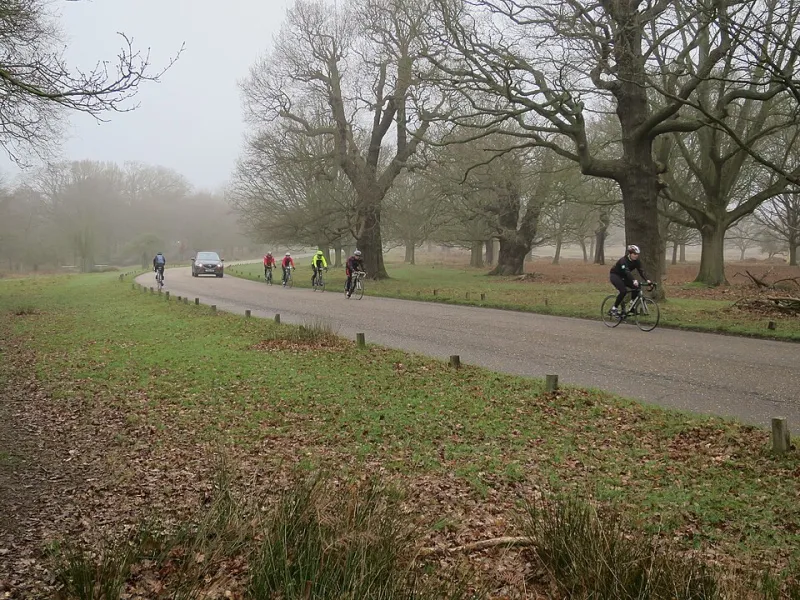
There is a particular kind of Kent winter ride that starts with good intentions and ends with a silent, single-file grind along an exposed lane. Nobody is talking. Everyone is staring at the wheel in front. The café stop was two hours ago and the last ten miles have felt like thirty. Nine times out of ten, the route was fine on paper. The wind simply was not part of the plan.
In Pembury, that is an avoidable mistake. Our prevailing winter wind is south-westerly, which means most rides have a natural shape if you are willing to plan them backwards. Instead of asking where you fancy going, ask where you want the wind behind you at the end. Then work back from there.
Start With the Finish, Not the Start
The useful question is not 'where shall we ride?' It is 'where do I want the tailwind to arrive?' If the forecast is south-westerly at 15mph, gusting 25, then the last chunk of your route should point roughly north-east. From Pembury, that might mean heading out through Speldhurst and Groombridge while you are fresh, then returning by Matfield, Brenchley or Paddock Wood with the wind doing some of the work. It is not a fixed route prescription; it is a principle. If the wind veers westerly or south-south-westerly, adjust the shape rather than abandoning the idea.
A tailwind home is not cheating. It is good route design. Winter riding is hard enough without spending the final hour fighting a headwind you could have avoided by turning the map around.
Read the Forecast Like a Rider, Not a Presenter
A generic 'windy' icon tells you nothing useful. Look at direction, sustained speed, gusts and timing. The Met Office and Windy are both fine for this; the trick is to check the hourly view rather than the headline. A south-westerly at 12mph is one ride. A south-westerly at 18mph gusting 30 is another thing entirely, especially on the exposed tops between Pembury and Bidborough.
Time matters too. Wind often builds through the morning, and the difference between setting off at 8am and 10am can be the difference between a breezy first hour and a proper battle. Add temperature and rain into the same glance. At 4C, a 12mph headwind does not feel like a number on a screen; it feels like a second jacket you cannot take off.
Also expect local variation. Kent lanes are not a wind tunnel with tidy edges. Hedges, cuttings, farm buildings and open field gates all change what reaches you. A forecast gives you the broad picture; the lane gives you the detail.
Use the Lanes as Windbreaks, With Caveats
One of the joys of riding in this part of Kent is that you can often choose a sheltered line. High hedges, sunken lanes and tree-lined stretches can take the edge off a winter blow. Use them. A route that strings together sheltered blocks feels far less punishing than one long exposed ridge, even if the distance is identical.
But do not treat a hedge as a guarantee. Gaps at field gates and junctions can deliver sudden crosswinds. High hedges can funnel gusts rather than block them. And hugging the left-hand edge to hide from the wind is a poor trade if it puts you in the gutter on a blind bend. Shelter is useful; safety comes first.
The best winter routes mix it up: a sheltered first thirty minutes, a short exposed section where you know to expect it, then another tucked-away lane. Think in blocks rather than one endless direction. Your legs will thank you, and your mood will too.
Set Bail-Outs Before You Need Them
A winter route should have escape routes built in. That might be a station at Tonbridge, Paddock Wood, High Brooms or Tunbridge Wells, or simply a shorter lane home via Matfield. The point is to decide before the ride starts, not halfway round when someone is cold, quiet and pretending to be fine.
For a solo rider, a bail-out is self-management. For a group, it is basic courtesy. If the wind is stronger than forecast, or the temperature drops faster than expected, a planned shortcut is not a failure. It is the route doing its job.
Make sure everyone knows where the bail-outs are and how to use them. A train ticket or card in a rear pocket is a small thing that can turn a grim afternoon into a merely forgettable one.
Brief the Bunch So Nobody Grinds Alone
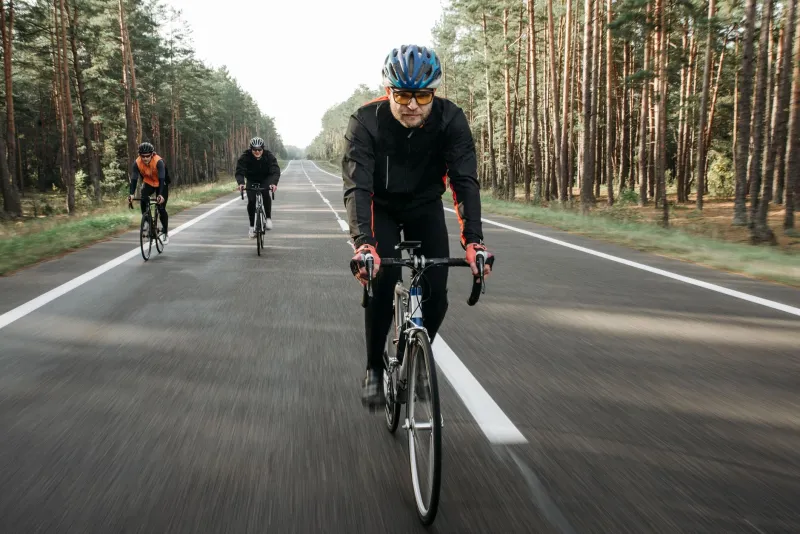
Group rides in winter need a little more honesty than summer ones. Into the wind, the group should stay together. That means short turns on the front, no half-wheeling, and no heroics from the strongest rider. The person who can hold 20mph into a headwind should sit up, not ride everyone off the wheel.
Say it out loud before you roll out. Three simple rules cover most of it: ride as a group into the wind, regroup after exposed sections, and treat the tailwind home as a free ride rather than a race. If the group is too mixed for the route, split deliberately at a planned junction. That is far better than an accidental split ten miles from home, with one rider grinding alone into a headwind and wondering why they came.
The tailwind leg is where the ride should come back together. Let it. Sit in, spin, chat, and arrive home with something left in the tank.
A Simple Routine for the Next Ride
Check the hourly wind direction and gusts. Draw the route so the first third points into the wind and the last third runs downwind. Mark two bail-out points and one sheltered regroup spot. Brief the group before you leave. Then ride out ugly and come home smug.
It is not complicated, but it is easy to forget. Winter miles are precious enough without wasting them on a route that fights you for no reason. Plan the return first, and the rest of the ride tends to look after itself.