Kent's Winter Gravel: Five Byways That Hold Up — and Three That Will Eat Your Bike
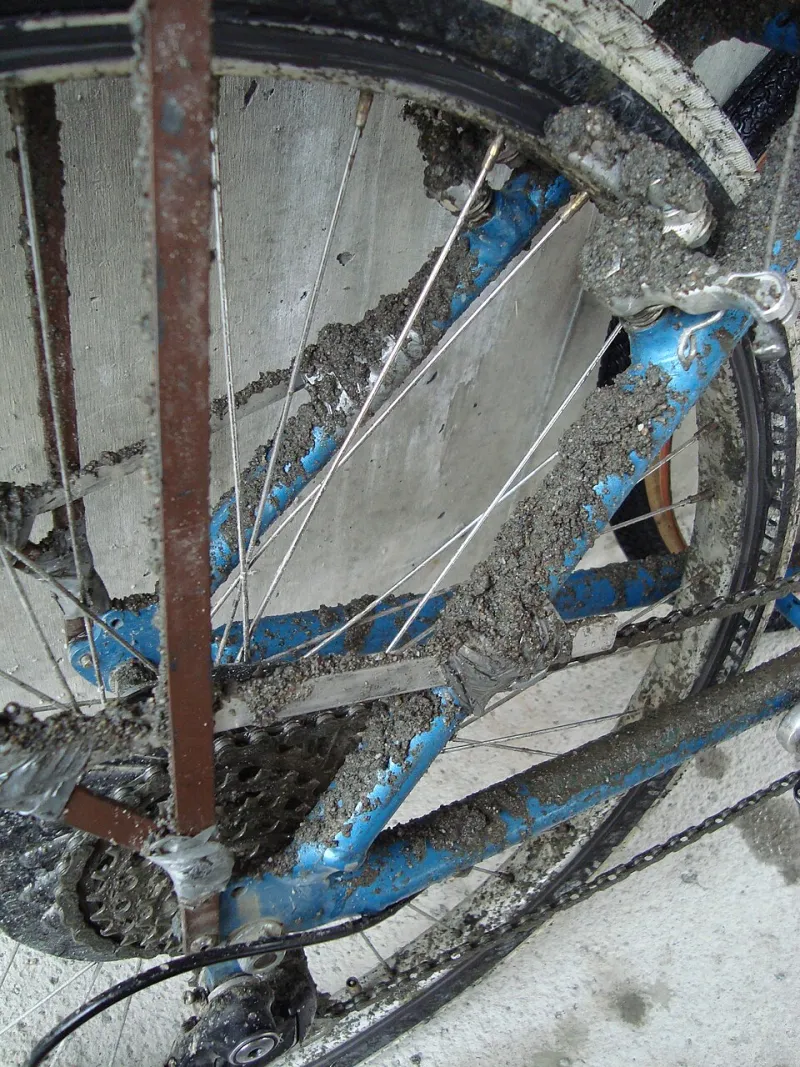
Photo: Jason Hollinger, CC BY 2.0, via Wikimedia Commons
Kent in winter has a particular talent for making tarmac feel like the only sensible option. The lanes are greasy, the wind is doing its thing across the Weald, and a gravel bike can start to look like a fair-weather toy. It isn’t. You just have to pick your byways with a bit more care than you would in July.
This is a surface-by-surface guide to the off-road stuff within easy reach of Pembury that generally stays rideable through the wet months — plus the local tracks we would not touch again until the ground dries out. It is not a definitive legal map. Check the Kent County Council definitive map before you go, and if a path is not a bridleway, restricted byway or byway open to all traffic, leave it alone. Cycling on bridleways is legal in England and Wales; cycling on footpaths is not. Gates should be opened, passed through and closed. Horses get priority. Mud is not a personality trait.
A quick word on legality, gates and manners
Most of the good stuff around Pembury is a mix of bridleways, restricted byways and the odd byway open to all traffic. That means you can legally ride a bike on them, but it does not mean you can treat them like a trail centre. In winter, the difference between a route that stays fun and a route that becomes a six-mile push is usually drainage, not difficulty. Sand and sandstone shed water. Clay holds it. Anything with a lot of horses, forestry work or standing water will be worse than it looks from the road.
Five that generally hold up
1. The sandy lane above Capel
Surface: sand over clay, with a greasy top but a firm base in most winters.
This is the one we reach for when the forecast has been grim all week. The lane between Capel and Tudeley drains better than the surrounding fields, so you get that rare winter combination: mudguards on, bike still pointing in a straight line. There are a couple of gates, a short steep bit that gets slick, and enough farm traffic to keep the surface broken up. A 40mm tyre is fine here; 45mm is kinder.
Watch for: the first hundred metres after rain, which can be more slippery than the rest. Ride it on the grass verge only if the verge is dry — otherwise you are just making the mess worse.
2. The Brenchley orchard bridleways
Surface: grass, roots and clay between the orchards, with short sections of hard track.
Between Brenchley and Matfield there is a useful little network that links the lanes without dumping you onto the A21. It is not fast. It is not pretty in February. But it is rideable, and it makes a good loop when you want an hour of off-tarmac without committing to a full day out. The orchard sections can be soft after prolonged rain, so keep your line high and avoid the poached edges.
Watch for: roots hidden under leaves, and gates that need lifting rather than dragging. If the ground is visibly holding water, turn round. A bridleway does not need to be ruined just because you have got the wrong tyres.
3. Goudhurst to Kilndown sandstone tracks
Surface: sandstone and hard track, with roots and a few steep pitches.
This is the closest thing we have to free-draining gravel around here. The sandstone gives you grip when the clay routes are sliding, and the trees keep the worst of the wind off. It is also steeper than it looks on a map, so pack a sensible gear and do not pretend you are on a chain gang. The descents are more fun on 45mm than 35mm, but you can get away with less if you are careful.
Watch for: walkers and dogs on blind corners, and the odd section that gets greasy where the canopy closes over. Bell, brake, smile.
4. The Lamberhurst to Scotney back track
Surface: mixed chalk and gravel, with a couple of gates and some field-edge grass.
The bridleway links around Lamberhurst are a good winter option because they dry out quickly and give you a proper change of scene without a huge drive. It is not a secret, so expect company at weekends. The surface is generally honest — no hero mud, no bike-eating ruts — but the field edges can get soft where livestock have been in.
Watch for: the National Trust estate is not a free-for-all. Stick to the bridleway and public access, and do not wander onto private paths because the map looks inviting.
5. The ridge above Pembury via the old coach road
Surface: mixed gravel, flint and leaf litter, with short clay sections that need respect.
The old coach road and the lanes that link Pembury towards Matfield make a good short winter loop when you want to leave from the shop and be back before the light goes. It is not all off-road — you will use tarmac to link the good bits — but the byway sections give you enough gravel to justify the bike. The flint can be sharp after rain, so keep an eye on tyre pressure and check for cuts when you get home.
Watch for: leaf litter over wet flint, which is about as grippy as ice with a bad attitude. Drop your pressure a little and stay off the front brake on the loose descents.
Three to leave until spring
1. The low Weald clay loop near Curtisden Green
This one is lovely in August and a liability in November. The clay holds water, the ruts get deep, and the mud has that special quality that packs into your fork arch until the wheel stops turning. It is not a bike problem; it is a geology problem. Leave it alone until the ground dries.
2. The bridleway through the woods below Henwood Green
Standing water, horse-poached edges and roots that are slicker than they look. It is a short cut that costs you twenty minutes and a set of brake pads. In spring it is fine. In winter it is a push with extra steps.
3. Any field-edge shortcut near Five Oak Green
If the map shows a dotted line and the ground looks like a cattle yard, do not be a hero. Some of these are not legal for bikes anyway, and the rest are barely legal for boots. A three-mile detour on tarmac is faster than a one-mile bog.
The bike setup that actually helps
Tyre width is the big one. For Kent winter byways, 40mm is the sensible minimum, 45mm is the sweet spot, and 50mm is great if your frame has the clearance. You do not need aggressive knobs. A file tread with a decent shoulder works better on wet clay and hardpack than a full mud tyre that drags on the lanes. Run lower pressure than you would in summer — somewhere around 25–30 psi for 45mm depending on your weight and the rims — but not so low that you pinch-flat on flint.
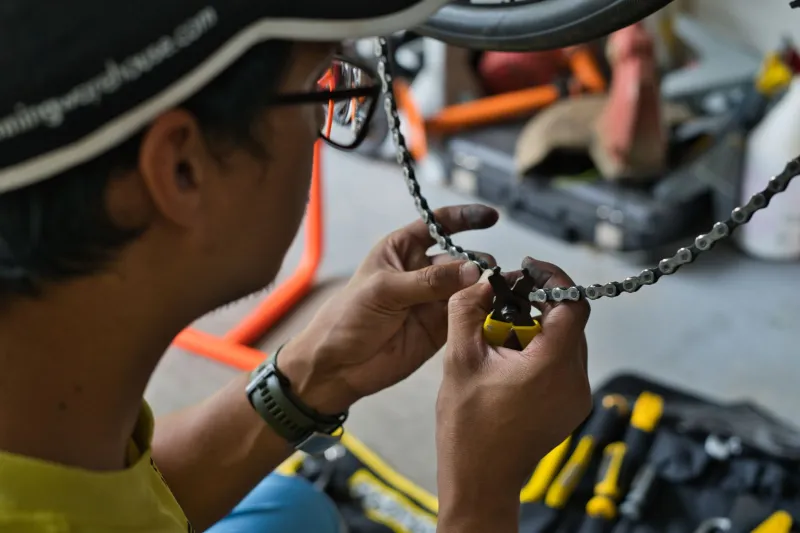
Mudguards with real clearance are worth more than a fancy groupset. Disc brakes are not essential, but they are reassuring when the rims are wet and the lanes are steep. And if you only do one thing before setting off, check that your brake pads have meat on them and your chain is not about to become a skipping rope.
A gravel bike is not the only answer, either. A rigid mountain bike with sensible tyres will be slower on the tarmac links and happier in the mud. That is fine. The point is to get out, not to win a category you invented yourself.
If you see us out there on a grey Sunday, say hello. We will be the ones closing the gate behind us.