Before the Gritter Comes: A 20-Minute November MOT for Your Bike
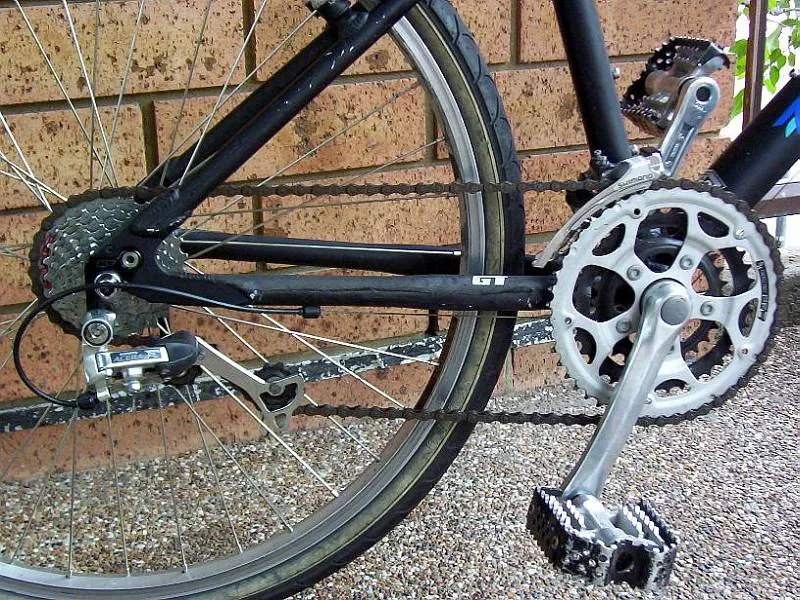
Photo: Rado bladteth Rzeznicki, Public domain, via Wikimedia Commons
There's a specific week in November when the forecast dips to one degree, the gritters roll out, and every ride quietly becomes a corrosion experiment. You won't notice at the time. You'll notice in March, when the chain is a fossil, the cassette is hooked and the spring service bill lands.
Twenty minutes now fixes most of that. Here are six checks, in the order we'd do them, with clear pass/fail calls. You need a set of hex keys, a chain checker, a pump, a torch and a rag. The tea is optional but traditional.
Why November, specifically
Salt doesn't corrode metal on its own — it needs water, and it holds onto it. Once the council starts spreading, the lanes around Pembury get a salty film that stays wet under the trees for days. Grit does the mechanical damage; salt does the slow chemical damage. Both get worse if the bike goes away wet and stays that way until the next Sunday.
A bike that gets checked in early November and wiped down after each ride will outlast one that gets ignored until the first nice day.
1. Brake pads — the two-millimetre rule
Rim brakes: find the wear line on the block, or measure what's left. Under about 1.5mm of pad material and they're done. Also run a straight edge against the rim wall — a concave braking surface means a new rim, not just new pads.
Disc brakes: pull the wheel and shine a torch into the caliper. You want at least 0.5mm of pad material above the metal backing plate. If the pads are shiny, oily or squealing persistently, they're contaminated — clean them with a proper disc brake cleaner, and if that doesn't cure it, replace them.
Pass/fail: if the remaining pad looks thinner than the edge of a 2p coin, swap them. Pads are cheap; a scored disc is not.
2. Chain wear — the one that pays for itself fastest
Drop in a chain checker. On 11- and 12-speed setups, replace at 0.5%. On older eight- or nine-speed drivetrains you can stretch to 0.75%, but no further.
A worn chain doesn't just shift badly — it grinds the teeth of every sprocket it touches. Leave it long enough and you're buying a cassette and possibly chainrings, at which point a £20 chain has cost you £100.
While you're there, look for stiff links, rust spots and any side-plate cracks. Switch to a wet lube for the winter months and wipe the chain down after every ride — two minutes with a rag removes most of the salt before it sets up camp. A quick rinse with cold water (never hot, never a jetwash) does the rest.
3. Mudguard bolts — the rattle you shouldn't ignore
Grab the guards and shake them. Anything loose, tighten it, and add a dab of medium-strength threadlock to the bolts while you're at it. Check the stays where they meet the frame eyelets, the bridge fitting and — if you run them — the rear of the front guard.
Clearance matters too. You want 5mm or more between tyre and guard at the tightest point, more if you're on 32mm rubber and the lanes are throwing grit about. A guard that rubs will wear through, and a snapped stay can fold itself into the wheel at exactly the wrong moment.
Worth doing: fit a decent front flap. It's the single cheapest upgrade for keeping spray and salt off your feet, your chainrings and your bottom bracket.
4. Headset — the rock test
Hold the front brake on and rock the bike forwards and backwards with your fingers wrapped around the junction of head tube and fork crown. Any knock or clunk means play. Check the stem bolts and top cap torque afterwards, because a loose headset and a loose stem usually travel together.
Sealed cartridge headsets are inexpensive and take twenty minutes to fit. If yours is gritty or notchy when you turn the bars with the front wheel off the ground, it's cheaper to replace than to nurse through the winter.
5. Tyres — flints, cuts and pressure
Kent lanes are full of flint. Spin each wheel slowly and look for embedded shards, cuts in the tread and any bulge in the sidewall. Pick out the flints with a small flathead — the ones that haven't punctured yet are the ones that will, three miles from home, in the dark.
Then check pressure over a week. Losing more than about 20% in seven days points to a slow puncture or a tired valve. In cold weather rubber stiffens and pressures drift, so recheck before each ride rather than once a month. For most riders on 28mm rubber, somewhere in the 70–80psi range works well through winter; drop a few psi in the wet for grip.
Pass/fail: any cut you can open with a fingernail and see the casing through is a new tyre. Don't gamble on it in the dark.
6. Axle and skewer security
Thru-axles: check the torque figure printed on the axle or the dropout — usually 10–12Nm — and use a torque wrench rather than guesswork. Quick releases: the cam should leave a firm imprint in your palm and the lever should close pointing backwards or upwards, tucked out of harm's way.
Do the same for rack bolts and any mudguard eyelets. Vibration plus wet roads loosens things that felt solid in October.
The order that saves time
Brakes first, because they're the safety item. Chain second, because it dictates what else you'll be buying. Then mudguards, headset, tyres, axles — the cheap checks that catch expensive problems.
Do it once now, then repeat the quick version (pads, chain, tyre pressure, skewers) every couple of weeks through to March. It takes five minutes and a rag.
What it saves you
Realistically? A chain and cassette instead of a chain. One set of pads instead of a disc. A headset instead of a head tube. Add it up and the twenty minutes is the best-value maintenance you'll do all winter.
And if you'd rather someone else did the leaning and the muttering, bring it in — November workshop slots go quickly, so it's worth booking ahead rather than turning up with a rattling mudguard on the first frosty Saturday.