What the Gritter Leaves Behind: The Five-Minute Winter Rinse That Saves Kent Bikes
Photo: cyclist rinsing bicycle with garden hose after winter road salt ride UK, via images.sftcdn.net
The first proper gritting run of the season always catches a few of us out. You head out from Pembury on a cold, bright morning, the lanes look merely damp, and you come home with a fine grey film across the down tube. No drama. Except that film is not just dirt. It is a concentrated dose of salt, grit and road filth, and it keeps working on your bike long after you have hung it up in the shed.
Kent’s winter roads are a mixed bag. The main routes get treated heavily, and the lanes around Pembury, Matfield and theridge towards Tunbridge Wells pick up plenty of spray from traffic. Even a short loop can coat your chain, brake pivots and bottom bracket with the sort of brine that makes steel fasteners fizz quietly overnight. The good news? You do not need a workshop, a pressure washer or an expensive corrosion kit to stay ahead of it. You need five minutes, a bit of consistency and a rough idea of where the damage actually happens.
Why road salt is harder on bikes than plain rain
Rain on its own is fairly harmless to a well-lubricated bike. Road salt is a different beast. It lowers the freezing point of water, which is great for drivers and less great for bicycle parts, because the resulting brine clings to surfaces and creeps into places ordinary water does not reach.
Salt is hygroscopic, meaning it pulls moisture from the air. That is why a bike that looks dry can still corrode in a cold garage. It also accelerates galvanic corrosion between dissimilar metals — steel bolts into aluminium frames, chain pins and plates, brake cable inners inside outers. The grit mixed in does its own bit of damage by acting as an abrasive paste around rims, discs and suspension seals.
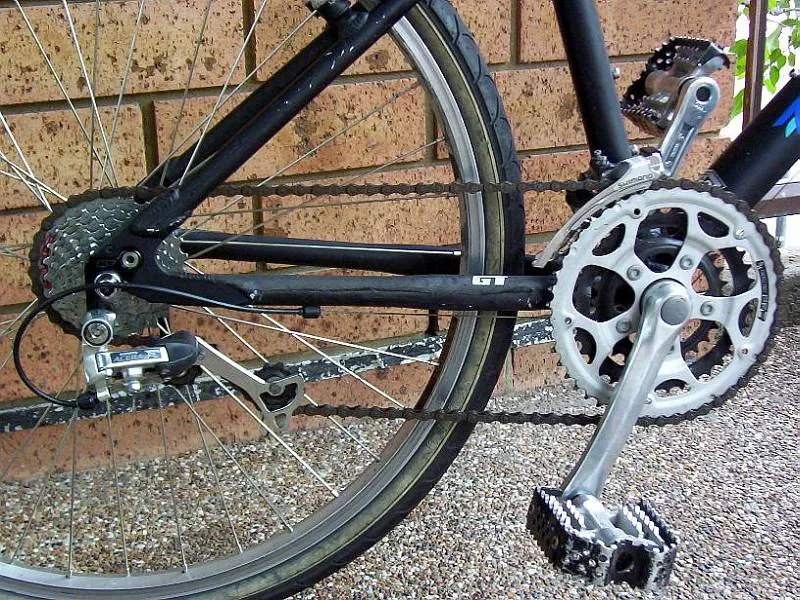
On a Kent winter bike, the usual casualties are predictable: chains, cassette teeth, brake pad springs, cable ends, headset bearings, bottom brackets and the heads of any cheap steel bolts. Frames rarely dissolve, but paint chips and exposed alloy dropouts can start to look furry if salt is left sitting on them week after week.
The five-minute rinse that actually works
The aim is not to give your bike a full valet every time you ride. It is to remove the salt before it has time to settle in. A gentle rinse and a quick dry-down will do more than an occasional deep clean.
Start with the drivetrain. A low-pressure hose is ideal, but a watering can or a bucket of cold water works just as well. Avoid jet washers around bearings, hubs and suspension seals — they push salty water in rather than washing it out. Tip the bike slightly and rinse the chain, cassette, derailleur pulleys and the underside of the down tube, where spray collects.
Next, rinse the brakes and wheel rims. On rim brakes, give the pads and braking surface a good flush. On discs, rinse the rotor and caliper area without blasting directly at the pistons. Then do the frame, paying attention to the bottom bracket shell, bottle cage bolts and the area behind the seat tube.
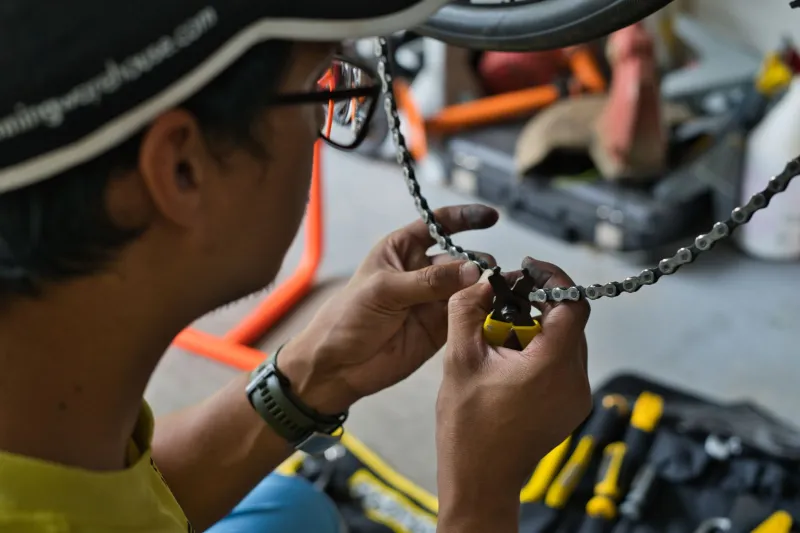
Dry the chain straight away with a rag, then apply a proper chain lubricant. In winter, a wet-style lube or a good wax emulsion will last longer than a thin summer lube. Wipe off the excess so dirt has less to cling to. If you have mudguards, rinse the inside of those too — salt collects there and drips onto your brakes and chainstays.
Five minutes. Maybe six if you are easily distracted by the kettle.
What to check once a week
A weekly two-minute inspection catches most winter trouble before it becomes expensive. Check chain wear with a gauge or a ruler — a worn chain eats cassettes and chainrings quickly. Look at brake pads for embedded grit and check cable inner wires for fraying near the pinch bolts.
Give the wheels a spin and listen for gritty hub bearings. Rock the cranks side to side to feel for bottom bracket play, and check the headset by holding the front brake and rocking the bike. None of this needs to be technical. You are just looking for roughness, wobble or rust weeping from places it should not.
Also check bolts. Salt loves bolt heads, especially the cheap ones. A dab of grease on threads during fitting and a quick wipe after wet rides keeps them from seizing. If you commute or ride through gritted lanes regularly, consider stainless or titanium bolts for the ones you adjust most.
Cheap habits that genuinely pay
Mudguards are the closest thing to a winter cheat code. They keep spray off your drivetrain, brakes and shoes, which means less salt reaches the parts that matter. A simple set of clip-ons is better than nothing, and full-length guards on a winter bike are worth their weight in saved chains.
Use a dedicated chain lube and apply it little and often. Do not use standard WD-40 as a chain lubricant — it is a water displacer, not a load-bearing lube. Keep a cheap rag and a small brush by the back door. A soft brush is excellent for shifting dried grit from jockey wheels and brake calipers without scratching anything.
Store the bike somewhere dry if you can, and never put it away wet if you can avoid it. If the shed is damp, a breathable cover helps. Finally, replace the chain before it is completely worn. A chain is far cheaper than a cassette, chainrings and a new set of cables after a winter of neglect.
The bit that adds up
Nobody enjoys rinsing a bike in the dark after a cold Kent lane ride. But the maths is simple. A few minutes of rinsing and drying each week costs you very little. A seized bottom bracket, a corroded freehub or a chain that has chewed through a cassette costs a lot more — in money and in lost riding time.
The gritter is not the enemy. It is doing its job. Our job is to make sure the salt does not get a free overnight stay on our bikes. Five minutes now, a quick weekly check, and a few sensible habits will see your winter bike through to spring with far fewer surprises.