Racks Don't Lie: A Twenty-Minute Locking Walk-Around for Pembury Cyclists
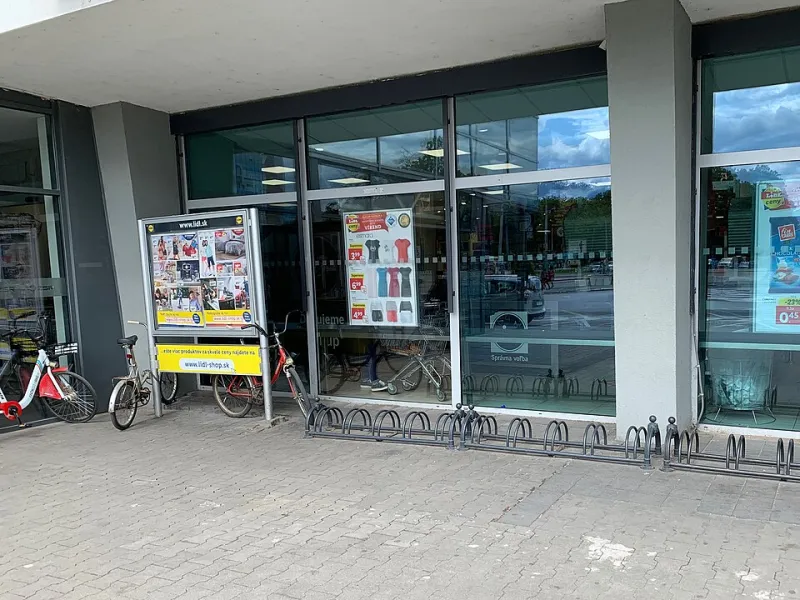
Photo: Wkmdjay, CC0, via Wikimedia Commons
There is a particular kind of optimism in locking a bike by the front wheel and hoping for the best. We saw it repeated at six familiar stopping points around Pembury and Tunbridge Wells on a grey Saturday morning: a village car park, the High Street racks, a station bike compound, a café stop, a leisure centre, and a supermarket stand. Nobody was asking to be robbed. They were just in a hurry, or cold, or thinking about cake.
That is the thing about bike security. It is rarely a dramatic failure of judgement. It is usually a small shortcut taken in the rain. So rather than wag a finger, we had a proper look at what works, what does not, and what you can check in twenty minutes before your next winter ride.
What the six stops had in common
The racks themselves were a mixed bunch. Some were solid Sheffield stands set into concrete. Some were wheel-bender style frames that hold a bike upright but offer little to lock through. One station compound was busy enough that getting a decent locking position felt like a competitive sport. A café rack was tucked round the back, out of sight of the window. The supermarket stand was near the entrance, which is good, but half the bikes were attached by a thin cable that looked more decorative than useful.
The recurring theme was not the rack. It was the lock placement. We saw plenty of bikes secured by a front wheel only, or by a frame leaning against a post with the lock looped around a brake cable. One bike was locked to itself. Another was attached to a short bollard you could lift a bike over without much effort. None of this makes you a bad person. It does make you an appealing target.
The three habits that undo good kit
First, locking the wheel rather than the frame. A front wheel is easy to remove on many bikes, and if that is all the lock is holding, the rest of the bike can walk away. Second, using a cable as the main lock. Cables are fine as a secondary measure, but on their own they are a delay, not a defence. Third, leaving slack. A loose chain or cable gives a thief room to work, and a lock resting on the ground can be attacked more easily.
We also saw the classic short-bollard mistake. If a bike can be lifted over the top of the anchor, the anchor is not doing much. Look for something fixed, tall enough, and not removable. A proper Sheffield stand is usually your best bet. Railings can work if they are solid and you can get the frame and wheel inside them, but check they are not loose.
What a sensible lock-up actually looks like
In plain English: put the lock through the frame and a wheel, then around something immovable. A D-lock through the rear triangle and rear wheel, secured to a Sheffield stand, is a good default. If you have a second cable, loop it through the front wheel and clip it to the D-lock. That way the frame, rear wheel and front wheel are all accounted for.
If you only carry one lock, prioritise the frame and rear wheel. The rear wheel is usually more expensive to replace than the front, and the frame is the bit you cannot ride home without. Take the front wheel with you if you are leaving the bike for a long time, or use a second lock. It sounds fussy. It takes about thirty seconds once you have practised it.
We also tried a few setups with our own tired kit. A cheap cable cut depressingly quickly with hand cable cutters. A decent D-lock with a proper shackle did what it should and made us feel slightly foolish for ever treating a cable as enough. None of this is lab science, but it is a useful reminder: the lock you carry and use properly will always beat the heavy one left at home.
The twenty-minute audit
Give this a go before the next wet Kent loop. You do not need to buy anything unless the audit tells you to.
Five minutes: check your anchor points. Walk your regular stops and look at what you are locking to. Is it fixed? Can a bike be lifted over it? Is it visible from a window or a busy path? At the station, use the proper stands rather than the first railing you see. At the café, ask if there is a better spot round the side. At the car park, choose the stand over the trolley bay.
Five minutes: check your lock. Open and close it. Make sure the key turns without a fight. Look for rust, bent shackles or frayed cable. If your lock lives in a bag, make sure you actually carry it on every ride. A lock at home is a lovely object and a useless security plan.
Five minutes: practise the routine. At home, lock your bike through the frame and rear wheel to something solid. Then add the front wheel with a cable if you use one. Do it until it feels normal. The point is to make the good habit faster than the lazy one.
Five minutes: make the bike less appealing. Photograph it, note the frame number, and register it if your insurer or local scheme allows. Take off lights, computers and anything else that clips off. A bike that looks like a hassle is less attractive than one with a nice light left on the bars.
Local habits worth keeping
Pembury is not a hotbed of bike crime, and that is exactly why it is easy to get complacent. A quick stop at the village shops still deserves a proper lock. A station commute needs a bit more thought because the bike may sit there all day. Café stops are usually friendly, but a bike left out of sight for an hour is still a bike left out of sight.
The aim is not to turn every ride into a security operation. It is to make the basic stuff automatic. Frame and wheel. Solid anchor. No slack. Take the valuables. Twenty minutes of practice now saves a miserable walk home later. And if you see someone at the racks doing the front-wheel-only dance, be kind. We have all been there.