Half-Wheeling, Mudguards and the Sacred Cake Stop: Seven Rules of the Pembury Bunch
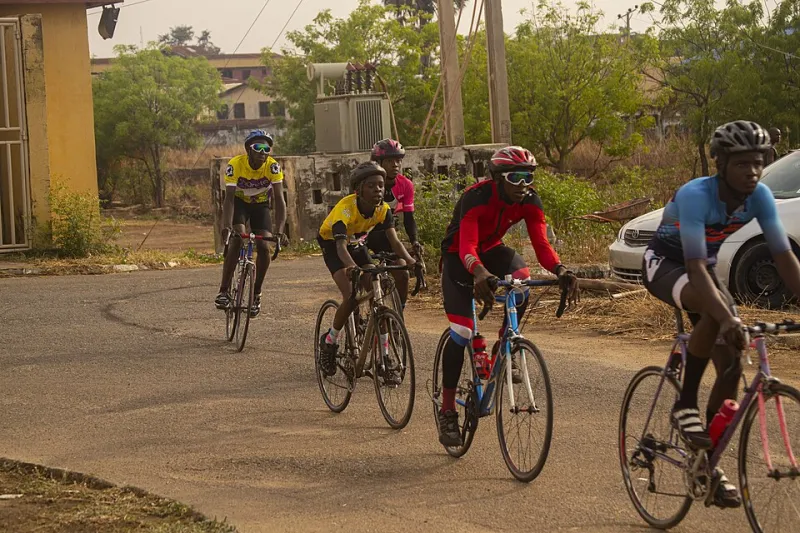
Photo: James Moore200, CC BY-SA 4.0, via Wikimedia Commons
Your first club run is a nerve-shredding thing. You worry about fitness, about whether your bike is smart enough, about the chain that's been ticking since Tuesday. Then you get out on the lanes between Pembury and Matfield and discover the real test: whether you can ride in a group without annoying everyone within twenty metres. The good news is that the Kent bunch is, on the whole, a forgiving place. The better news is that a handful of quiet habits do most of the heavy lifting.
Turn up on time — and turn up honest
Arriving five minutes early is not old-fashioned; it's the difference between a smooth roll-out and twelve people standing around a village hall car park in the cold. Say hello, say you're new, and be straight about your pace. Nobody minds a rider who's finding their legs. They mind a rider who claims to be a diesel and turns out to be a dynamo for the first eight miles before vanishing backwards on the climb out of Brenchley. The group will look after you if it knows what it's looking after.
Half-wheeling is a tax on everyone
You know the one. You're riding two abreast, and the person beside you edges their front wheel half a length ahead. Then a bit more. Then a bit more. Suddenly the pace has crept up, the conversation has died, and the whole bunch is stretched like a rubber band. Half-wheeling is the most common crime on a club run, and it is almost never deliberate. It just happens when someone is fitter, or distracted, or secretly keen to prove a point. On narrow Kent lanes it's also genuinely risky: you drift towards the verge, the person beside you gets squeezed, and the group surges and brakes in a way that makes everyone miserable. Ride alongside, not ahead. If you want to go faster, take a longer turn on the front and then ease off.
Mudguards are not a fashion statement
In November, the lanes around Lamberhurst and Goudhurst are less road, more soup. A full mudguard is a courtesy, not a personality trait. If you haven't got one, you're welcome — but park yourself at the back and stay there. This isn't a moral failing; it's a simple matter of not spraying gritty water into the face of the person behind you for three hours. The same goes for a rear flap that actually reaches the ground rather than stopping at the brake bridge. Nobody expects a brand-new winter bike. They do expect you to notice which way the rooster tail points.
Point, call, and mean it
Kent lanes are beautiful and treacherous in equal measure. Flint, gravel, horses, tractors, a Transit van taking the racing line through a blind bend — the bunch relies on the eyes at the front. Point at holes. Call "car up" and "car back" clearly. Warn about gravel before you're on top of it, not as you swerve. And if you're second wheel, pass it back. The whole thing collapses if only the leader is paying attention. That said, don't become a foghorn. Constant shouting is its own kind of exhausting. Say what matters, say it once, and let the group settle.
Nobody wins the Brenchley sign sprint
There is a time and a place for going full gas. It is a race, or a Strava segment you've agreed on, or the final climb when everyone's already half-cooked. It is not through a village, past a junction, or on the approach to a blind crest. Attacking on a club run doesn't make you strong; it makes you the person nobody wants to sit behind next Sunday. If you've got energy to burn, use it on the front into a headwind and buy yourself some goodwill.
The cafe stop has a protocol
This is where new riders are most often caught out, because nobody explains it until you've committed a sin. Order quickly. Pay for your own cake. Don't leave your bike across the doorway. Don't disappear without saying where you're going. And don't be the person who orders a pot of tea for four and then wonders why the bunch is still standing outside in the cold. The cafe stop is the social heart of a winter ride — it's where the group re-forms, where the slowest rider catches their breath, and where the route gets argued over. Treat it like a shared living room, not a drive-through.
The ride isn't over until everyone's home
A no-drop ethos isn't a slogan; it's a habit. If someone punctures, you stop. If someone is struggling, you ease. If the light is fading on a November afternoon, you check that the tail-end rider has a working rear light and knows the way back. Carry the spares you'd want someone else to carry for you. The rider who blasts off the front on the final drag into Pembury and leaves a newcomer to find their own way home has missed the point entirely.
None of this requires a fancy bike. In fact, the most polished carbon machine in the car park won't buy you a shred of goodwill if you half-wheel, spray the bunch, and vanish at the cafe. Good manners are the cheapest upgrade in cycling — and on a wet Kent lane in November, they're worth more than any groupset.