Pass Wide, Wave Back: The Kent Lane Etiquette That Keeps Everyone Smiling
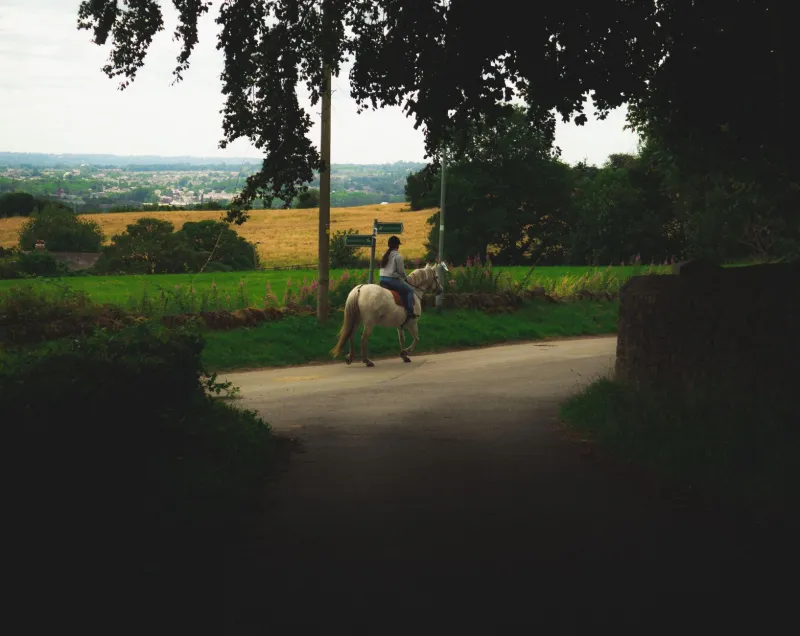
Kent lanes are not really roads in the modern sense. They are corridors of mud, flint and hedge, held together by goodwill and the occasional passing place. Between Pembury and Matfield, or out towards Brenchley and Horsmonden, you will meet riders, walkers, dogs, horses, tractors and vans — sometimes all within a mile. The trick is not to treat these encounters as obstacles. Treat them as the point of the lane.
At Pembury Cycles, we like to call the good version of this the horse-field handshake: a small, unhurried exchange that says I have seen you, I am not in a rush, and we can both get on with our day. It costs nothing and saves a lot of tutting.
Read the lane before you read the map
Most lane trouble starts with speed, not rudeness. A blind bend at the end of a muddy straight is not the place to be carrying 20mph and a head full of Strava. Ease off before you can see the problem. Look for the signs: hoofprints in the mud, a fresh pile of horse manure, a walker's boot print on the verge, a tractor tyre track wider than the lane.
On the lane from Pembury down towards the Weald, the hedges can be high enough to hide a horse until you are almost on it. If you cannot see round the corner, ride as if something is there. That is not defensive; it is just good manners with a survival instinct attached.
Horses: slow early, speak normally, and skip the surprise bell
Horses deserve their own paragraph because they are the encounter most likely to go wrong quickly. A horse is a prey animal. A sudden noise, a flapping jacket or a cyclist appearing over the hedge can turn a quiet hack into a rodeo. The rider may be calm, experienced and entirely in control — until they are not.
So slow down early. Not at the last second, with a theatrical skid. Early enough that the horse has time to hear you and the rider has time to decide what they want. Say something in a normal voice: Morning, plenty of room when you're ready. Do not shout. Do not freewheel loudly behind them. And think twice about the bell. A bell is brilliant on a canal towpath; on a quiet lane it can startle a horse and make the rider's day much harder.
If the horse is nervous, stop. Give it space. Ask the rider what they would prefer. Pass wide and slow, on the side they indicate, and do not accelerate away until you are well clear. If you are in a group, split up and pass one or two at a time. A bunch of ten cyclists ticking past a horse is not a charming local sight; it is a stress test.
Walkers, dogs and the two-abreast question
Walkers on a narrow lane often have nowhere to go. The verge may be a ditch, a nettle patch or a six-inch strip of grass. So give them the lane. Slow down, say good morning, and do not assume they can hear you coming. Headphones are common, and so is the wind.
With dogs, read the owner before you read the dog. A lead is a good sign; a long, slack lead is a warning. Give a wide berth and be ready to stop. If a dog looks worried, stopping is almost always kinder than trying to sneak past.
Two abreast is fine on a wide road. On a single-track lane, it is often not. Single out early, not when you are already nose to nose with a walker. If you are riding with a friend and nattering away, one of you needs to be the eyes-and-ears person. Swap the job every so often. It keeps the chat going and the etiquette honest.
Tractors, vans and the blind-bend standoff
Tractors are not being difficult. They are simply wider than the lane and often doing a job. If you meet one on a bend near Capel or Five Oak Green, stop where you can be seen and let it come past. Do not wave it on from a position that puts you in the hedge. A tractor driver has a better view of the immediate lane than you do, but not a magic one.
Vans are a different animal. Most drivers are fine; a few treat a narrow Kent lane as a personal challenge. If a van comes at you on a blind bend, do not squeeze into the verge and hope. Stop, stay visible, and hold your line if it is safe. A hand signal and a smile can defuse more than a lecture. If the lane is blocked completely, sort it out calmly. Someone may need to reverse. Volunteer if you can, and do not make the driver feel like they have failed a test.
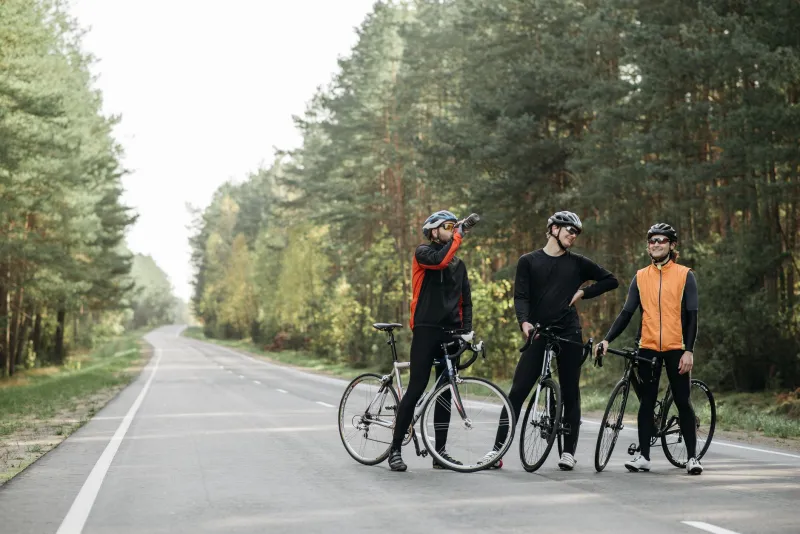
With a group of ten, the standoff problem is usually self-inflicted. The first two riders stop, the next eight bunch up, and suddenly the lane is a bicycle traffic jam. Better to spread out, leave gaps, and let one rider act as the go-between. It looks organised. It also makes it much easier for a van or tractor to edge past.
The pass-wide-and-slow checklist
- Slow down before you need to, not when you are already close.
- Say hello in a normal voice. Avoid shouting and avoid the bell around horses.
- Ask the horse rider what they want. They know their animal.
- Pass wide and slow, and do not accelerate away until you are clear.
- Single out for walkers and dogs on narrow lanes.
- Give tractors and vans room to do the sensible thing, even if they have not worked out what that is yet.
- In a group, split up and leave gaps. A calm line beats a clustered wobble.
- If you get it wrong, wave, mouth sorry, and carry on. Most people are not keeping score.
When the lane bites back
Sometimes it all goes pear-shaped. A horse spooks, a dog lunges, a van clips the hedge, and everyone ends up standing in the mud looking at each other. In those moments, the best thing you can do is be the least dramatic person there. Check that everyone is okay. Apologise if you were too close. Do not launch into a seminar on lane etiquette while someone is trying to calm a horse.
The lanes around Pembury are some of the best riding in Kent precisely because they are not sterilised. They are shared, messy and alive. A little patience costs you ten seconds. A bad pass costs everyone a lot more. So pass wide, wave back, and keep the horse-field handshake going. It is the cheapest upgrade your riding has ever had.