The Ride Isn't Over When You Unclip: A Ten-Minute Car-Park Debrief Worth Copying
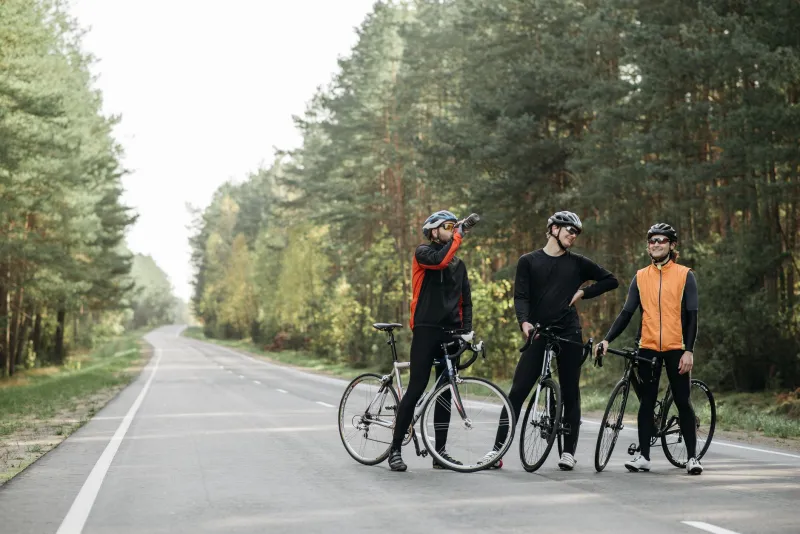
The last bottle goes back in the cage, the Garmin gets stopped, and someone says the immortal words: “Same time next week?” Then everyone drives home. It is a perfectly pleasant ending to a Kent lane ride, but it leaves a lot of useful information lying on the tarmac. A ten-minute car-park debrief can turn a good bunch ride into a better one — not by turning the group into a committee, but by giving everyone a simple way to learn from the miles they have just ridden.
This is not about a post-mortem. Nobody needs a formal review after a soggy loop out towards Tonbridge. Think of it as the cycling equivalent of a quick team huddle: short, specific and focused on the next ride rather than the last mistake.
Why the car park beats the group chat
Group rides are self-organising, which is one of their charms. It is also why the same small problems tend to repeat themselves. The bunch splits at the same awkward junction. Someone half-wheels on the same drag. A pothole gets called late because everyone assumes the person in front has seen it. None of these things are disasters, but they nibble away at the smooth, friendly riding that makes a club run worth getting up for.
A debrief works because it happens while the ride is still fresh. People remember the junction, the rattling mudguard, the moment the group stretched out. Leave it until Wednesday and the details have gone. Do it in the car park and you can fix the pattern before it becomes a habit.
It also helps newer riders. A club run is a strange mix of social outing and practical exam, and most people learn the norms by watching. A brief, friendly chat makes those norms explicit: we regroup here, we call holes early, we look after the tail. That is how a bunch becomes a club.
The ten-minute shape
You do not need a clipboard. One person facilitates, and that role should rotate so it does not become one person’s job forever. Keep an eye on the clock, because a debrief that sprawls becomes a grumble.
A simple shape works well:
- Two minutes to gather. Bikes down, helmets off, no one fiddling with their phone. Stand in a rough circle so everyone can hear.
- Five minutes on four prompts. Where did the group split? What was one roadcraft lesson? Was there a mechanical near-miss? What worked well?
- Two minutes to agree one change. Not five changes. One.
- One minute to say thanks and share notices. Next week’s route, any kit left behind, cake-stop plans.
If there is nothing to discuss, say so and go home. A two-minute debrief on a quiet ride is fine. The habit matters more than the length.
Four prompts that do the actual work
Where did the group split?
Ask for the place, not the person. “We lost the back three after the left turn past the pub” is useful. “Dave went backwards on the climb” is not. Once the group identifies the spot, agree a practical fix: soft-pedal after the junction, regroup at the white gate, or put a second rider on tail duty. Keep it concrete enough that everyone knows what will happen next time.
What was the one roadcraft lesson?
Pick one thing and explain it in a sentence. It might be calling potholes early, holding a steadier line on a blind bend, easing off at a junction rather than racing into it, or leaving enough room when someone stands on a climb. The trick is to make it about the group’s shared habits, not an individual’s error. “Today’s lesson: call the hole, not the rider” is the kind of line that sticks.
Was there a mechanical near-miss?
This is the prompt most groups skip, and it is often the most useful. A rattling mudguard, a loose bottle, a brake rubbing after a wet lane, a chain shipped on a rough patch — none of these need to be a big deal, but they are worth a thirty-second check before the bike goes back on the car. It also normalises the idea that looking after your kit is part of being in the bunch, not a sign that you are the weak link.
What worked?
End on something specific and positive. Early calls on a fast descent. A new rider slotting in neatly. Someone waiting at the top without being asked. Good café stop with space for muddy bikes. Naming what worked is not fluffy; it tells people what to keep doing.
Keep it blame-free, or it stops working
A debrief lives or dies on tone. The moment it feels like a telling-off, people stop contributing, and the group loses the information it needs. Use “we” language. Instead of “you cut me up at the bridge”, try “we lost the tail at the bridge — next time let’s soft-pedal after the turn.” Instead of naming someone for a late call, talk about the group habit: “We were calling holes late on that descent.”
If something serious happens, deal with it privately and promptly. The car park is not the place for a public trial. And keep the small stuff small: no Strava segment arguments, no kit-shaming, no relitigating every acceleration. One lesson per ride is plenty.
Make it a habit, not a one-off
A debrief works best when it is simply what the Pembury bunch does. Rotate the facilitator so it does not feel like a leadership performance. New riders will see that questions are welcome and mistakes are discussed without blame. After the ride, someone can put one line in the group chat — “Next week: regroup at the white gate after the left turn” — so the change does not vanish by Tuesday.
You could even keep a scruffy laminated card in a saddlebag with the four prompts on it. It is a very Pembury solution: cheap, practical and slightly over-engineered. But it saves the group from reinventing the conversation every week.
None of this replaces proper skills coaching or a bike check at home. What it does is catch the local, repeatable stuff that coaching sessions rarely cover: this junction, this lane, this bunch, this week. Ten minutes in the car park is not a committee meeting. It is free coaching, a bit of club culture and a better ride next Saturday — all before the engine is warm.