The Saturday Morning Verdict: Calling a Kent Winter Ride Without Guessing
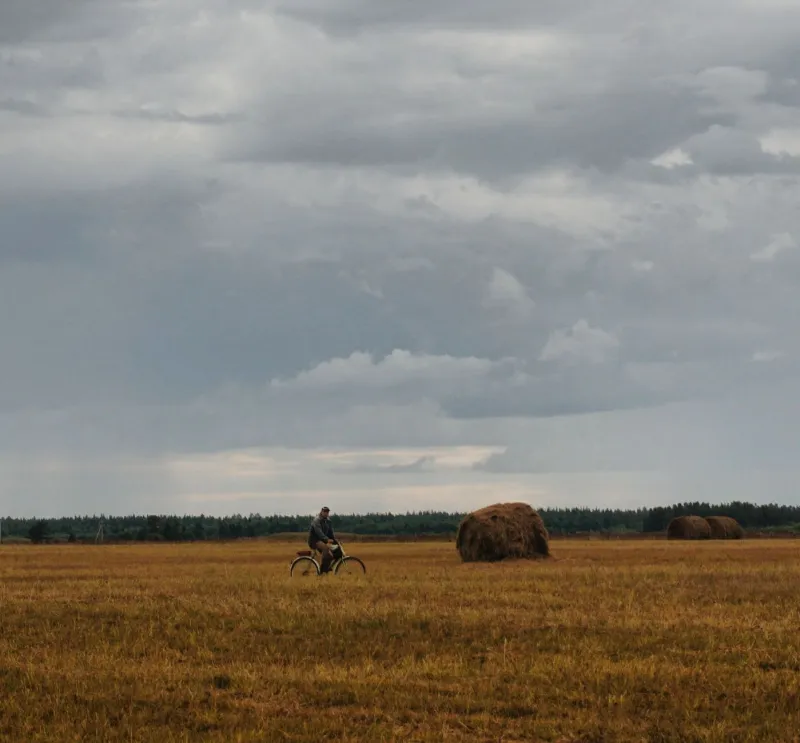
Saturday morning in Pembury. The phone says 40 per cent chance of rain, which is forecast-speak for your call. The sky over Capel is doing something else entirely: low, grey, and just bright enough to make you doubt the mudguards. This is where winter rides get decided, not at the top of a climb. A soggy Saturday in 2026 still rewards a bit of judgement before you clip in.
Read the weather as a package, not a headline
A rain percentage on its own is close to useless. Ten per cent at 3°C on an untreated lane is a worse prospect than 60 per cent at 8°C on a salted main road. Temperature, wind and rain need reading together.
Start with temperature. Near freezing, shade matters more than the numbers on the app. A lane under trees can hold ice while the high street is merely damp. Between 3°C and 5°C, wet roads become a judgement call, especially on the shaded descents around Matfield and Brenchley. Above 6°C, a soaking is usually just a soaking.
Then look at wind. A south-westerly often stacks showers up over the Weald, so the radar can show a train of them rather than one passing band. Check gusts as well as averages. A steady 15mph is manageable; 15mph gusting 35mph on exposed ground is a different ride, and one that will make a doubtful day feel like a chore.
Finally, use the radar loop. Is the rain arriving, clearing, or lining up for another go? A passing shower is a kit decision. A queue of showers is a route decision.
The two-minute look out of the window
Before the kit comes out, look west and south-west. That is usually where the next weather is coming from. A dark, ragged cloud edge suggests showers with some punch. A uniform grey lid suggests drizzle that will not clear in a hurry. Blue gaps are promising, but in winter they often mean showers are still possible rather than guaranteed dry.
The garden gives you surface clues. A wet patio means recent rain. Puddles with ripples mean wind and active rain. Puddles with a skin of ice mean the lane will be worse than the patio. Trees tell you about gusts before the forecast catches up, and the air temperature on your face tells you more than a weather app icon ever will.
This is not about becoming a meteorologist. It is about noticing whether the day is improving or closing in before you commit an hour to it.
Check the lanes before the lanes check you
Main roads lie. They are salted, drained and busy enough to stay clear. The lanes around Capel, Matfield and Brenchley are where the truth lives. Use the first mile as a recce, not a race.
Look for shine on the tarmac. A wet lane at 7°C is fine. A gleaming lane at 3°C is a warning. Look for leaf slime in the gutters, tractor mud on the bends, and standing water at the usual dips. If a puddle is deeper than your rim, the lane beyond it may be worse. If the surface is greasy with mud and the temperature is dropping, save that lane for another day.
Our rule is simple: if the first mile feels sketchy for reasons that will not improve, turn around. No winter route is so important that it is worth a broken collarbone or a long walk home in cleats.
Build a route that can shrink
Every winter ride should have three sizes: the full loop, the shorter loop, and the café-and-home version. Decide all three before you leave.
Start with a section you are happy to repeat or cut. Use sheltered lanes into the wind while you are fresh, and save exposed ridges for the return only if the weather has actually improved. Have an escape hatch in mind. A station at Paddock Wood, Tonbridge or High Brooms, or a café that will let you drip quietly in a corner, turns a mechanical or a mood swing into a manageable problem rather than a miserable epic.
The shrinkable route is not pessimistic. It is what lets you say yes on a doubtful morning. You are not committing to the full loop; you are committing to the first hour and a sensible decision after that.
Set the bail-out rule before you clip in
A bail-out rule only works if you decide it before the ride, when you are warm and rational. At the far point of a loop, with wet gloves and a headwind, every bad idea starts to sound reasonable.
Use the Pembury two-strike rule. By the 45-minute mark, if any two of these are true, turn for home: rain heavier than drizzle for ten minutes; temperature dropping towards 3°C; gusts pushing you across the lane; hands or feet going numb; the road surface turning shiny. Ice is a one-strike rule. If you see it, or feel the back wheel step out on a shaded patch, you are done.
No debate at the junction. The rule has already made the decision. If you are asking yourself whether you should bail, that is a strike in itself.
What a good bail-out looks like
Shortening a ride is not failure. A 35-minute loop that finishes before the worst of the weather is better training than a two-hour grimace. You get home with a clear head, a bike that still works, and a bit of appetite for next weekend.
If you do get back early, use the time well. Rinse the worst of the Kent grit off the frame, dry the chain, and put the kettle on. Winter fitness is built by repeatable rides, not heroic ones. The rider who rides little and often through January usually arrives in March in better shape than the one who saves it all for a single muddy epic.
When to sack it outright
Some mornings are a no. An ice warning, gusts over 40mph, flooding on lanes you know, or a cold that has moved into your chest are all good reasons to leave the bike. A muddy walk, an hour on the turbo, or an afternoon spent sorting the brakes can keep the habit alive without making the day worse.
The point of the decision tree is not to talk you out of riding. It is to help you ride more often by making the doubtful days smaller and more manageable. The forecast will still be wrong sometimes. The sky over Capel will still keep its own counsel. But if you read the weather as a package, check the first mile honestly, and set the bail-out rule early, a soggy Saturday can still end as a good day out.