The Wind Is Not Your Enemy: A Pembury Playbook for Kent's Blustery Lanes
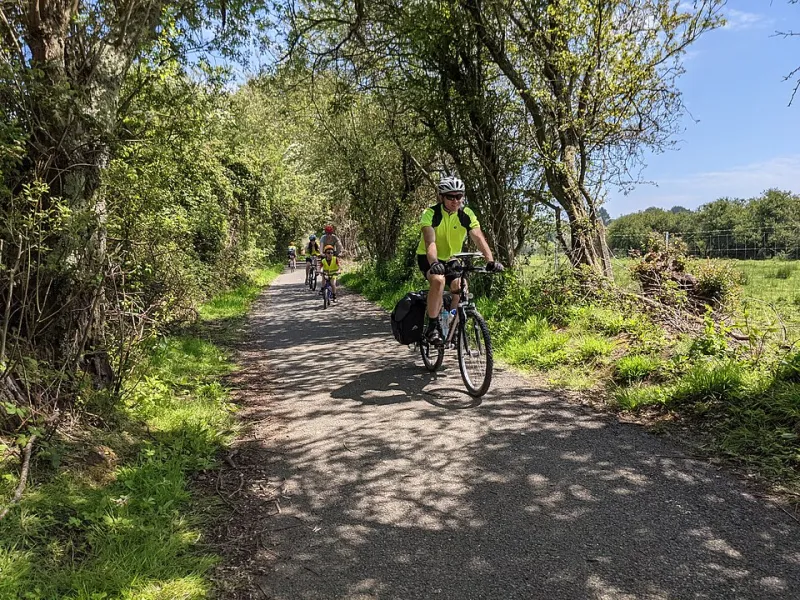
Photo: Calum Rogers , CC BY-SA 2.0, via Wikimedia Commons
There is a particular noise a Kent lane makes when the wind funnels through a gap in the hedge. It is not the romantic rustle of a coffee-table cycling book. It is more of a low, steady roar, usually accompanied by the flap of a jacket sleeve and the realisation that the next three miles will be conducted at a speed best described as 'character-building'.
Most riders treat a headwind as a fitness test. Fair enough, but that is only half the story. A headwind is also a routing problem, a gearing problem and, if you are riding in company, a sharing problem. Get those three things right and the wind stops being a personal insult. It becomes weather. Pembury sits in a useful spot for this: close enough to the Weald to get the full south-westerly, close enough to the North Downs for a bit of shelter when the gusts get serious. Here is how we tend to approach it.
Route With the Wind, Not Against Your Temper
The first rule is simple: decide which way the wind is blowing before you decide which way you are riding. A south-westerly means the exposed lanes heading south and west will feel like work, while the return leg heading north and east should feel like a reward. If you are planning a loop, do the hard bit first. Ride into the wind while your legs are fresh and your mood is still intact, then let the tailwind bring you home.
That often means resisting the obvious out-and-back. A run from Pembury out towards Rotherfield and back through Tunbridge Wells can work nicely when the wind is doing its usual thing: you take the south-westerly on the chin on the way out, then enjoy a helping hand on the return. The same logic applies to any local loop. If your route finishes with a long, straight, exposed drag into the wind, you have designed a bad route. Redesign it. Use woods, hedged lanes and valleys for the homeward leg, and save the open ridges for when the wind is behind you.
It is also worth thinking about crosswinds. A road that feels sheltered with the wind behind you can become a nervous, shoulder-tugging experience when the wind is coming across the lane. On gusty days, give yourself a little more room, especially on exposed sections near Tonbridge or out towards the Weald. The bike will move. Let it.
Gear Down Before You Think You Need To
A headwind is basically a gradient you cannot see. Treat it like one. If you would drop onto the small chainring for a climb, do the same when the wind picks up. There is no prize for grinding a big gear into a south-westerly. In fact, mashing a heavy gear into the wind is a good way to tire your legs, stiffen your back and turn a manageable ride into a slog.
Aim for a cadence that feels sustainable rather than heroic. For most riders, somewhere around 80 to 90 revolutions per minute is a decent target. If your legs are labouring and your upper body is starting to rock, you are over-geared. Click down one or two sprockets, keep the pressure smooth and let the wind do its worst. On a group ride, this matters even more. Nobody enjoys the rider who surges into the wind, dies, drops back and then repeats the whole performance at the next gap in the hedge.
Gearing is not just about fitness. It is about rhythm. A slightly easier gear lets you keep a steady, calm pedal stroke, which is far more efficient in a headwind than a series of short, angry efforts.
Get Low, Stay Loose
Body position makes a real difference, but not in the way that some riders think. You do not need to fold yourself into a time-trial tuck on a Kent lane. You do need to stop sitting up like a sail. Lower your torso a little, bend your elbows, relax your shoulders and keep your hands light on the bars. A death grip on the hoods will not stop the wind. It will just give you sore wrists and a stiff neck.
On longer headwind sections, dropping into the drops can help. It gives you a slightly lower profile and, just as importantly, a different hand position. Change things around every few minutes. Sit up, stretch, move your hands. The wind is relentless; your body position does not have to be.
Keep your head up, too. It is tempting to stare at the front wheel and will the road to pass, but that does nothing for your speed and plenty for your morale. Look ahead, pick a point on the horizon and ride to it. The lane will come to you either way.
Share the Work Without Turning It Into a Race
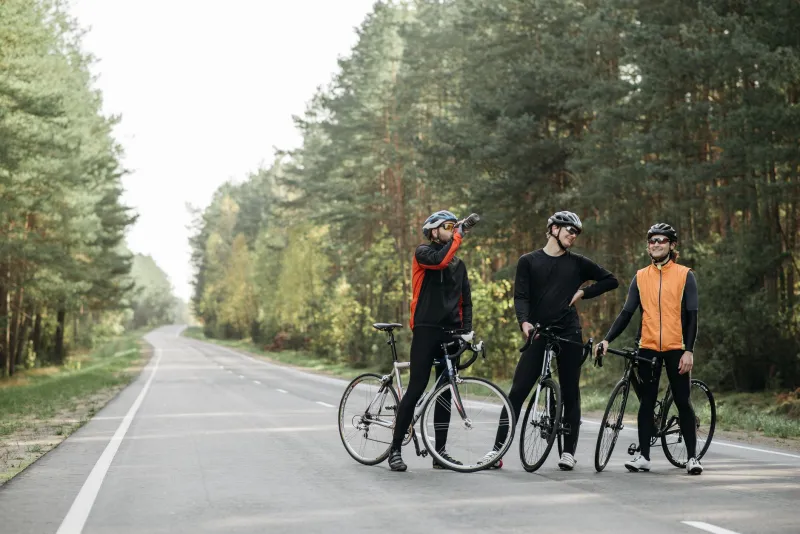
If you are riding with others, a headwind is a good excuse to get organised. The simplest approach is a steady through-and-off. Ride two abreast where it is safe and the road allows, take short turns on the front, then swing off and soft-pedal back into the shelter of the group. Thirty seconds on the front is usually plenty in a stiff wind. The point is not to prove anything. The point is to keep everyone together and keep the pace smooth.
In a crosswind, think about shelter rather than heroics. Ride slightly to the leeward side of the rider in front, but do not overlap wheels. If the group is large, split into smaller groups rather than fanning across the whole lane. And talk. A quick 'wind's coming from the left' or 'single file' is worth more than a silent, chaotic shuffle every time the road bends.
If you are riding solo, borrow the same idea. Pick a landmark, ride a little harder to it, then ease off for a minute. Short efforts into the wind are far easier to manage than one long, grim push.
Win the Mental Battle by Breaking It Down
A headwind homeward leg is as much a psychological problem as a physical one. The trick is to stop thinking about the whole ride and start thinking about the next small thing. The next junction. The next village sign. The next hedgerow gap. The next bend where the wind might ease. Count them down. It sounds daft, but it works.
It also helps to remember that a headwind outbound usually means a tailwind home. If the wind is against you for the whole ride, you have either chosen the wrong route or you are having a very honest day. In that case, plan a stop. A café, a village green, a bench out of the wind. A ten-minute break with a bit of cake and a hot drink can completely reset your mood. We are not suggesting you turn every ride into a picnic, but pretending you do not need a breather is not toughness; it is poor planning.
Finally, do not fight the wind every second. Let the bike move beneath you, keep your breathing steady and accept that the pace will be lower. The south-westerly is not personal. It is just Kent doing its thing. Gear down, get low, share the work and save your energy for the bit where the wind finally turns. The tailwind home is worth it.